December 1, 2025
How to Select the Right Packaging Machine: A Complete Manufacturer’s Guide (2025 Edition)
Investing in a packaging machine isn’t just a capital expense — it’s a long-term strategic decision that directly influences production speed, operational cost, product quality, compliance, and customer satisfaction.
But with hundreds of machine types, technologies, material options, and automation levels available today, choosing the right one can feel overwhelming.
This guide breaks down the selection process into practical, business-driven steps — helping you make a confident, future-proof decision.
1. Start With Your Product, Not the Machine
The machine must adapt to your product — not the other way around.
Evaluate:
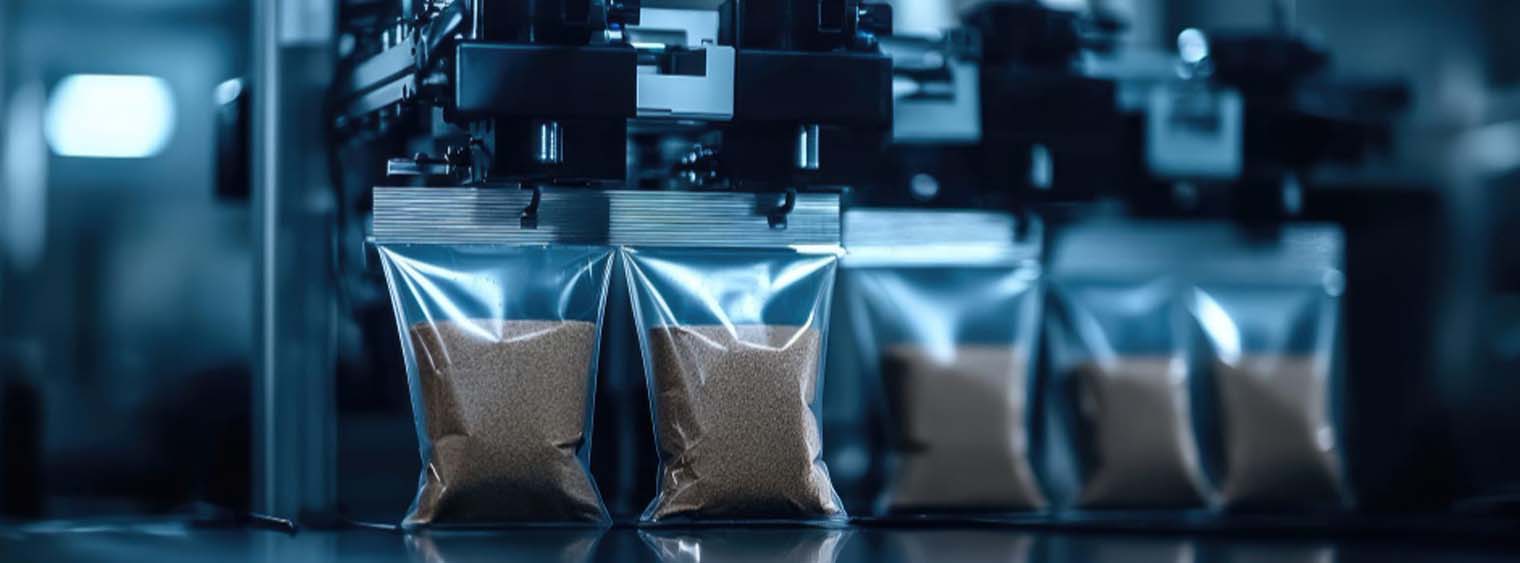
- product state (solid, liquid, powder, granular, fragile, sticky, oily, corrosive)
- packaging format (bags, pouches, cartons, bottles, cups, sachets, trays)
- barrier, hygiene & safety requirements
- sensitivity to air, moisture, or contamination
- shelf-life expectations
Understanding the product ensures correct machine type, sealing technology, filling system, and automation level.
2. Define Production Goals & Growth Horizon
Your current capacity shouldn’t be your only benchmark — future demand matters.
Assess:
- expected production rate (units/hour)
- seasonality or volume fluctuations
- expansion or export plans
- product line diversification roadmap
A machine operating at 80% capacity today should still support tomorrow’s growth — without major reinvestment.
3. Choose the Right Packaging Material & Format
The packaging material determines what machine technology you need.
Consider:
- PE, PP, PET, aluminum foil, paper-based laminates, non-PE recyclable films
- mono-material sustainability requirements
- MAP, vacuum, resealable, or tear-notch features
- printing, branding & labeling possibilities
Machine-material compatibility prevents sealing failures, jams, deformation, and high wastage.
4. Evaluate Available Machine Technologies
Technology affects output, accuracy, downtime, operator involvement, and cost of ownership.
Compare machines based on:
- automation capability (manual, semi-auto, fully auto)
- servo-controlled vs mechanical systems
- smart sensors + vision detection
- filling accuracy tolerance
- digital integration (Industry 4.0 readiness)
The right technology delivers consistency, speed, and long-term stability.
5. Calculate Total Cost of Ownership — Not Just Purchase Price
A cheaper machine may cost more in the long run.
Analyze:
- energy usage
- spare parts availability & cost
- preventive maintenance requirements
- operating labor requirements
- film/material wastage rate
- machine warranty length
A reliable machine pays for itself through uptime, accuracy, and low operational expense.
6. Assess Usability, Safety & Changeover Efficiency
Production efficiency depends on people, too.
Check whether the machine offers:
- intuitive controls & HMI interfaces
- tool-free or minimal changeover time
- ergonomic design
- safety compliance & guards
- easy cleaning & sanitation access
User-friendly machines reduce training time and operator errors.
7. Choose a Supplier — Not Just a Machine
Your supplier becomes a long-term production partner.
Verify:
- technical expertise & industry experience
- installation, commissioning & training support
- real-time service responsiveness
- availability of local technicians & spare parts
- customer references within your sector
- upgrade and customization capability
A strong supplier ensures performance reliability long after purchase.
8. Demand Live Demos, Trials & Performance Proof
Never finalize based on brochures alone.
Request:
- product testing on the actual machine
- speed, sealing & fill accuracy validation
- wastage and reject-rate reports
- maintenance demonstration
Real-world trials reveal what spec sheets don’t.
9. Ensure Compliance, Traceability & Quality Standards
Critical for food, pharma, cosmetics, chemicals & export-driven industries.
Confirm support for:
- GMP, CE, FDA, HACCP standards
- batch coding & serialization
- barcode/QR readability
- quality inspection systems
Compliance issues cost more than equipment.
10. Look for Scalability & Digital Future-Readiness
A good packaging machine grows with your business.
Consider:
- modular upgrades
- ability to integrate robotics or conveyors later
- compatibility with MES/ERP systems
- predictive maintenance data
- remote monitoring capabilities
Future-proofing prevents replacement costs.
Final Decision Checklist
Before investing, ensure the packaging machine matches your:
✅ product type & characteristics
✅ production volume & growth goals
✅ packaging material & sustainability vision
✅ budget & long-term cost expectations
✅ workforce skill level
✅ quality, safety & compliance needs
✅ service support requirements
If it checks all the above — it’s the right machine.
Conclusion
A packaging machine isn’t just equipment — it’s an operational backbone.
Choosing wisely leads to faster production, stronger brand identity, reduced waste, consistent quality, and long-term profitability.
Selecting the right machine takes research, testing, and strategic evaluation — but the return is worth it.